Sights in Quanzhou
Quanzhou is a treasure trove of diverse cultures, boasting both rich regional characteristics and, thanks to its millennia-long history of international transportation, an open and welcoming embrace of cultures from around the world. Here, you can find traces of religions from all corners of the globe. Tumen Street, less than a hundred meters long, is a gathering place of diverse styles, yet they manage to coexist peacefully. Quanzhou, once considered by Marco Polo to be "the most prosperous city in the world," has long since returned to its ancient simplicity. The culmination of its glorious years has left it a city steeped in meaning. While it lacks the crowds of neighboring Xiamen or the bustle of Taiwan across the strait, it has fully realized the charm of southern Fujian.
Within Quanzhou city, attractions are primarily concentrated in Licheng District, with West Street, East Street, Tumen Street, and Zhongshan Road serving as key tourist destinations. However, the greater Quanzhou region, encompassing the county-level cities under its jurisdiction, such as Nan'an, Jinjiang, Shishi, and Hui'an, offers a more authentic Southern Fujian flavor, well worth exploring. These cities are all within a 20-40 minute drive from Quanzhou, but Nan'an and Hui'an offer fewer hotels, making day trips from Quanzhou possible.
West Street
As early as the Song Dynasty, West Street symbolized Quanzhou's prosperity. For millennia, it has silently witnessed the transformation of the ancient city of Citong (Quanzhou, also known as Li, Licheng, Citong City, and Wenling). Today, it remains the best-preserved ancient street in downtown Quanzhou, boasting over 20 cultural relics under various levels of protection. Yet, these cultural relics don't in the least disrupt the lives of residents. Street vendors selling spring rolls, peanut candy, and even bookstores flank the streets, creating a sense of strolling through the bustling streets of the Tang and Song dynasties.
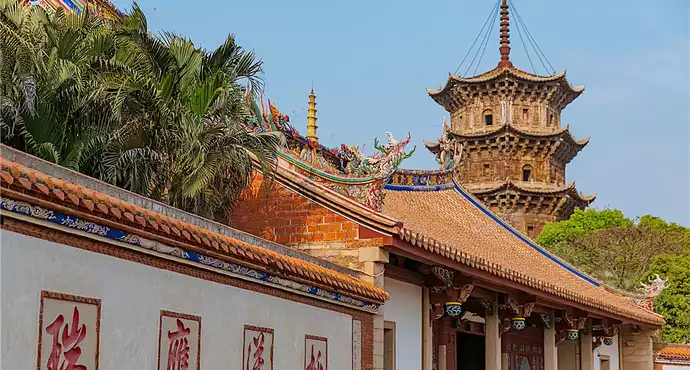
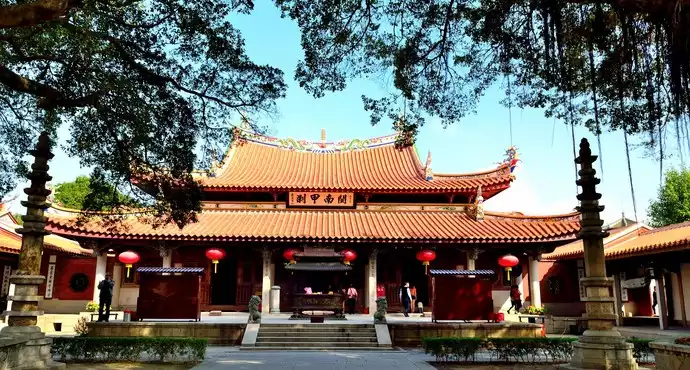
Kaiyuan Temple, located on West Street, boasts a history of over 1,300 years. Its main building is the Main Hall, where 24 celestial musicians are depicted between the beams. Seventy-two bluestone reliefs of sphinxes and human faces adorn the front of the hall, while two ancient Brahman bluestone pillars stand behind. These exquisite carvings serve as reminders of the prosperity of the area's past. Buy a bracelet, circle it around an incense burner, clasp your hands together, and quietly close your eyes in prayer. You'll receive a "Guolu" blessing bracelet.
The most remarkable features of the temple are its East and West Pagodas. The East, known as the Zhenguo Pagoda, and the West, known as the Renshou Pagoda, have survived the 8.0 magnitude earthquake and numerous typhoons in Quanzhou during the Wanli reign of the Ming Dynasty, leaving only the West Pagoda slightly tilted. Visitors can take a photo here, imitating the classic "Leaning Tower of Pisa."
Nanjun Lane, East Street
On Nanjun Lane, a street lined with trendy shops, stands a temple. The small gate, inscribed with the words "Platform," feels like a gateway to the old world. Once inside, along a stone path, you'll discover a hidden gem! It's like stumbling upon a paradise amidst the bustle of the city. Everything here is magnificent: an ancient well to suppress demons, a pond for releasing animals, a Song Dynasty stone pagoda, and stone pagodas. Even Master Hongyi once resided at the temple, preaching and spreading the Dharma. The quiet temple seems to be filled only by the chirping of cicadas. An old monk might occasionally be followed by a small wild cat. The air is faintly scented with incense. It's a pleasant break from shopping, perfect for a refreshing break.
This was the first Taoist temple built after Taoism was introduced to Quanzhou. Primarily dedicated to the Three Pure Ones, the Jade Emperor, and orthodox Taoist deities, the temple boasts a large screen wall with exquisite sculptures depicting the Tai Chi diagram, the sun, the moon, and the stars. In the mornings, Taoist priests at Yuanmiao Temple greet devotees with reciting sutras. The temple is bustling daily, especially during the first lunar month. A visit to Yuanmiao Temple is a must-see for those seeking refuge from debt. Every New Year's Eve, a play is performed on the stage throughout the night, offering relief to those in debt and helping them through the New Year.
Tumen Street
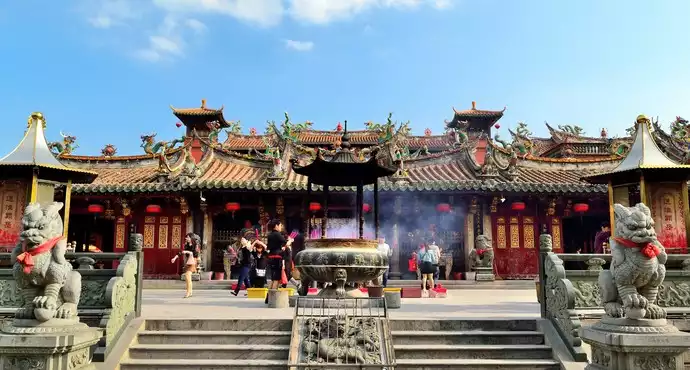
Guan Yu's image of loyalty, righteousness, benevolence, and courage is highly revered in Quanzhou, and as a result, the Guandi Temple is considered the most popular of the city's many temples. Especially in the early morning hours of the first day of the Lunar New Year, many locals flock here to worship and pray for good fortune for the coming year. The Guandi Temple boasts a history of over 600 years, dating back to the early Ming Dynasty, and boasts exquisite architecture and carvings. Evening performances of traditional Quanzhou opera are held on a stage in front of the temple, making it a truly entertaining experience to join in the fun with the local elderly.
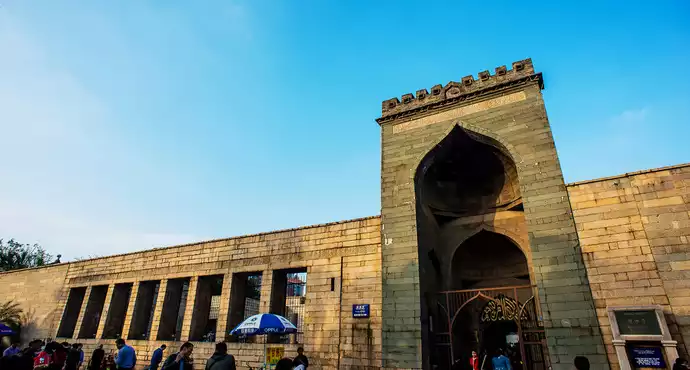
The Quanzhou Qingjing Mosque is China's oldest surviving Islamic building, founded in 1009 during the Northern Song Dynasty. Nestled on the quaint Tumen Street, this mosque, embodying traditional Arabic architectural style, feels remarkably harmonious, offering a glimpse into the fascinating fusion of diverse cultures. A close look at the tall, arched niche in the center of the west wall reveals a Quran inscribed in ancient Arabic. These details bear witness to ancient China's internationalization. The Fengtian Altar within the mosque collapsed in 1607, but the unrestored remains exude a captivating beauty of imperfection.
The Quanzhou Confucian Temple is a grand complex of ancient Confucian temples, incorporating architectural styles from the Song, Yuan, Ming, and Qing dynasties. Its most remarkable features aren't just the exquisite ancient architecture, but also the Quanzhou Confucian Temple Cultural Relics Exhibition Hall, the Quanzhou Historical Figures Memorial Hall, and the Quanzhou Ancient Education Exhibition Hall. Furthermore, the square has become a children's paradise, with simple rides and opportunities for children to ride around in "little tigers" (children's electric toy cars). During the Lantern Festival, the Confucian Temple is arguably the busiest place in Quanzhou, offering opportunities for guessing lantern riddles, admiring lanterns, and watching parades. Before the high school entrance exams and college entrance exams, teachers and parents purchase black pens and visit the temple to pray for good luck.
Zhongshan Road
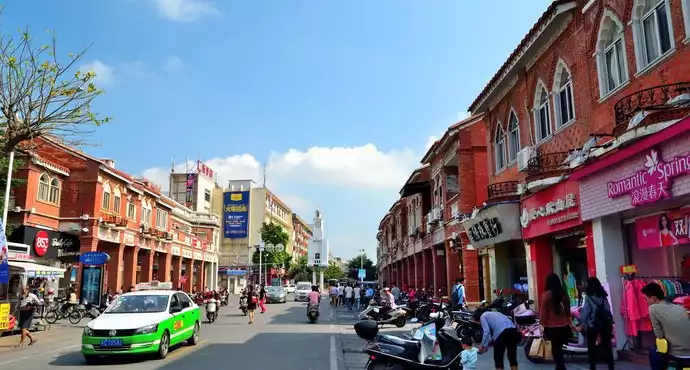
Zhongshan Road is Quanzhou's most famous street, home to the only remaining and best-preserved commercial street in China featuring row upon row of arcade-style buildings. The columned arcades lining the street embody the essence of Nanyang-style architecture. As the saying goes, "On rainy days in the south, arcades offer shelter from the wind," these structures provide shelter from the sun and rain, making travel more convenient. Some elderly people bring bamboo stools to enjoy the cool air beneath the arcades, chatting casually in their gentle Minnan dialect. The Hong Kong and Chinese flags neatly displayed on the walls are a bit yellowed, reflecting the passage of time, becoming a piece of history while also reflecting today's prosperity.
Tianhou Temple is also known as the Mazu Temple. Quanzhou Port was once the "largest port in the East," and before setting sail, people would pray to Mazu for favorable weather and good harvests. Many cities have Mazu temples, but Quanzhou is the hometown of this "Goddess of the Sea." Believers from Taiwan and other places often travel to the Tianhou Temple to trace their roots, pay homage to their ancestors, and pay homage to Mazu. Hundreds of Mazu statues have been brought back from the temple. While the temple is usually sparsely populated, it becomes especially bustling during festivals. During the Lantern Festival, a giant rice turtle is displayed. "Begging for a turtle" is a long-standing folk custom in Fujian and Taiwan, and many people touch it to pray for happiness and well-being in the coming year.
Since it's a "religious museum," Catholicism is a must-see. Catholicism was introduced to Quanzhou from Spain. In 1896, Spanish priest Rabin Moya (Ren Daoyuan) built a Gothic cathedral in Xucuocheng, Huaxiang. Although tucked away in a narrow alley, shaded by tall banyan trees, the church, clad entirely in pink, stands out, exuding a sacred and romantic air. The church often hosts events, and if you're lucky, you might even encounter one of the elderly nuns who offer guided tours.
Former Residence of Li Zhi
When you come to Quanzhou, it is necessary to pay homage to the pioneering and eccentric thinker Li Zhi. However, you need to understand him before you will be interested in this place. Otherwise, it is just an ordinary house, so it is best to do your homework in advance. Because Li Zhi lost his eyesight in his later years, the eyes of the bronze statue of Li Zhi in the courtyard are closed.
Qingyuan Mountain Scenic Area
Qingyuan Mountain is a renowned Taoist sanctuary, known as the "First Immortal Mountain of Penglai in Fujian Province" during the Yuan Dynasty. The mountain boasts Laojun Rock, China's largest, most exquisitely carved, and oldest stone statue of Laozi. You can take a taxi directly to Tianhu Lake at the summit to watch the sunrise, where you can enjoy a bowl of vermicelli soup with fried dough sticks and a pot of jasmine tea before descending. Alternatively, you can hike up the mountain on your own. The towering ancient trees create a natural oxygen bar, and along the way, you'll find a cable bridge and small pavilions.
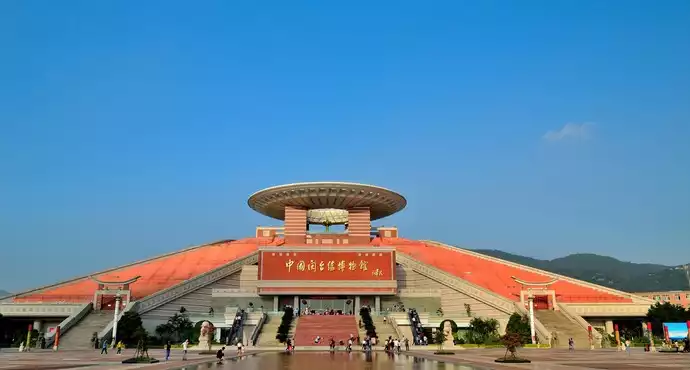
The Fujian-Taiwan Relations Museum showcases extensive cross-strait cultural history, elaborating on the fact that Taiwan has been part of Chinese territory since ancient times. Upon entering, you'll be greeted by a striking 18-meter-tall, 9-meter-wide painting of a banyan tree, titled "Standing Together, of the Same Species, Born from the Same Roots." This painting, created using gunpowder, is truly breathtaking. To understand a city, it's best to first understand its culture, and this is a true classroom for Minnan culture.
Luojiang District
Luoyang Bridge, one of the four famous bridges of ancient times, is a masterpiece of Han Chinese bridge architecture. Its sturdy structure and beautiful shape demonstrate a high level of engineering and artistic skill. The bridge is adorned with numerous stone carvings and stone lions. While not known for its beauty, the history behind it attracts many visitors.
To this day, Luoyang Bridge is still an indispensable bridge for Quanzhou people. Bicycles pass by on the bridge from time to time, and the "ringing" sound of bells lingers, echoing with the laughter of passers-by chatting. It makes people wonder: how many people have walked across Luoyang Bridge, and how many ships have sailed out of Quanzhou Port.
Nan'an
Quanzhou's ancient dwellings are unique, characterized by exquisite craftsmanship in woodcarving, clay sculpture, brick carving, and stone sculpture. After half a century of refinement, the Cai Family Ancient Residences complex, one of Nan'an's most iconic architectural gems, emerged. Built during the Qing Dynasty, the Cai Family Ancient Residences exemplify the "red brick culture" of southern Fujian, each featuring carved beams and painted rafters in vibrant colors. While some of the residences are private residences and closed to the public, you can witness the locals' shared life for generations. Photography enthusiasts will love this place.
Jinjiang
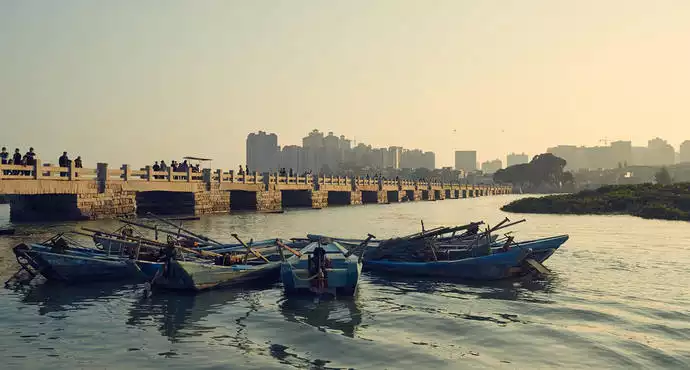
Known for its "longest bridge in the world," Anping Bridge, also known as the "Wuli Bridge," is China's longest extant ancient stone bridge. Constructed of granite and sandstone, it spans the beaches of Anhai, Jinjiang, and Shuitou, Nan'an. Walking across Anping Bridge, one wonders how such a bridge, spanning over 2,000 meters of stone, could have been built. Five pavilions offer resting places for passersby. The ancient bridge belongs to drizzling rain, oil-paper umbrellas, and a gentle sea breeze, creating a feeling of being transported into an ink painting.
Xunpu is a small fishing village in Quanzhou, located at the downstream estuary of the Jinjiang River in Quanzhou Bay. The village is known for its beautiful fishermen's daughters, often adorned with floral ornaments. The locals affectionately call them "Xunpu Aunties." The seafood sold here is incredibly fresh, and you can chat and bargain with the market ladies. There are also houses made of oyster shells—cuo (fourth tone, "cuo")—with silvery-white walls nestled within red brick walls. While this is commonplace for locals, seeing it in person still astonishes you at its ingenuity.
Hui'an
Locals often come here for outdoor recreation, as Qingshan Bay's gently sloping coastline offers expansive views and fine sand perfect for swimming. BBQ stalls rent grills and charcoal fires along the shore, allowing you to bring your own ingredients or simply buy and eat them. At night, the beach is often filled with sky lanterns, offering visitors the opportunity to purchase a few and write their wishes on them, sending them to the heavens. Fishing boats occasionally return from the shore, their tanned fishermen and graceful Hui'an women sorting through their day's catch. One truly admires the Quanzhou people's dedication to every endeavor.
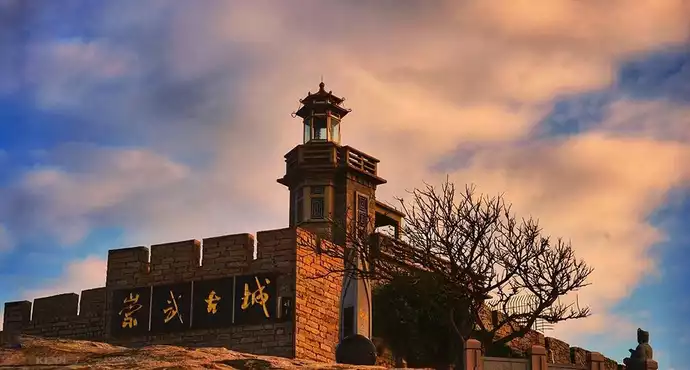
Located on the southeast coast of Hui'an County, Chongwu Ancient City is China's most complete surviving T-shaped stone city. Qi Jiguang once camped here during the Ming Dynasty's campaign against Japanese invaders. Waves crash against the weathered stone walls, evoking a sense of battlefield smoke and smoke, where the radiance of history remains. Chongwu's streets and houses are entirely stone, yet the atmosphere is anything but monotonous. This is a land of stone carving, where every intricate carving is a captivating work of art.
Stone Lion
The Gold Coast lies on the west coast of the Taiwan Strait, facing Taiwan across the water. A massive stone statue of Guanyin stands on the shore, seemingly guarding the sea and creating a sense of peace. This beach boasts a wealth of amenities, including a resort, amusement park, and horse riding stables, making it a perfect destination for families and children.