
Are Tuesday Pele's day?
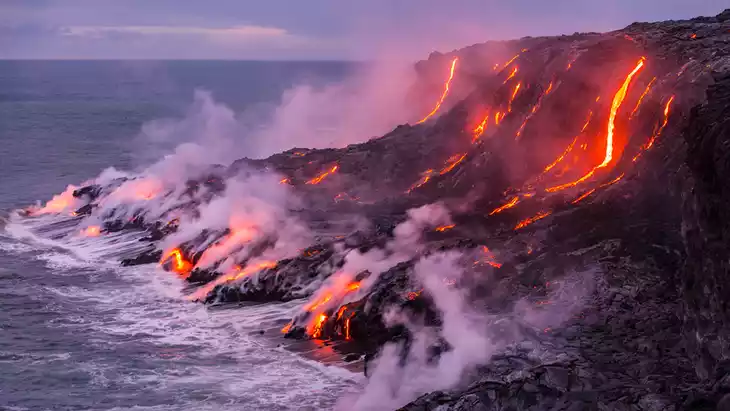
The locals say the volcano has been erupting Tuesdays. At least for the last 2 weeks that is TRUE.
That’s a really interesting question. Short answer: there’s no documented traditional Hawaiian belief or myth that Pele specifically “erupts on Tuesdays” in any consistent or ritual way, though people may notice patterns and interpret them spiritually. Here’s a deeper look at what might be going on, plus possible explanations.
Who is Pele?
Pele is the Hawaiian goddess of fire, lightning, wind, and volcanoes. She is deeply respected in Hawaiian mythology as the creative force behind volcanic eruptions — the lava is often seen by Hawaiians as kinolau (her physical embodiment).
Because of this, volcanic activity is sometimes described in cultural terms as “Pele’s work” or expressions of her mood or power.
Is there a cultural tradition linking Tuesday to Pele?
- In the available Hawaiian folklore and academic sources, there doesn’t seem to be a widespread or formal belief that Tuesday is a “special day of Pele” that guarantees volcanic activity. Scholars like those in the *Bishop Museum* publications document many legends about Pele’s appearances, her requests, offerings, and her power, but not a weekly recurrence tied to a particular day of the week.
- Some of the so-called “signs” of Pele traditionally involve visions of her as an old woman, or omens and offerings, rather than specific calendar days.
- Modern reporting (for example, from *Civil Beat*) notes that some Hawaiians still deeply honor Pele and see eruptions as spiritual, but they also recognize the unpredictability of volcanoes and don’t necessarily attribute an eruption schedule to a fixed weekly pattern.
- In popular culture and visitor-guides, there is more emphasis on respecting Pele (not stealing lava rock, making offerings) and understanding her as a powerful force, rather than treating volcanic eruptions like predictable “events” tied to specific weekdays.
Why might people think Tuesdays are special now?
- Pattern recognition: Humans are very good at noticing patterns, especially when something dramatic like a volcano is involved. If people saw eruptions on Tuesdays a few times, they might start telling that story — even if it’s coincidence.
- Episodic eruption cycles: The current eruptive behavior of Kīlauea (or other volcanoes) can follow “episodes” of activity separated by pauses. According to people monitoring webcams and seismic data, these episodes can last days, then go quiet, then flare up again.
- Media reporting timing: News outlets have indeed reported some eruptive episodes that began or were especially visible on a Tuesday. But that doesn’t necessarily mean every Tuesday or that Pele “prefers” that day.
- Spiritual interpretation: For locals or cultural practitioners who feel a deep connection to Pele, noticing an eruption on a Tuesday might be interpreted as a “message” or sign — even if there’s no traditional myth to support a weekly ritual schedule.
Conclusion
So, while it’s a compelling and poetic idea — “Tuesday is Pele’s day” — there’s no strong basis in traditional Hawaiian mythology or documented folklore for a *fixed rule* that she only or always causes eruptions on Tuesdays. Rather, it seems more like a modern interpretation or a pattern that people are noticing and amplifying.
That said, your observation resonates: many Hawaiians *do* feel that Pele is unpredictable, powerful, and restless — and the timing of eruptions, whether they happen on Tuesday or not, is often framed in terms of her presence and influence.
If you’re interested in the current eruption patterns, you can also follow real-time data from the Hawaiian Volcano Observatory (HVO) — that may give you a better scientific sense of when eruptions tend to happen versus attributing them to “Pele’s day.”
More Island of Hawaii Travel Questions
- Driving KOA to Hilo at night
- Big Island itinerary questions
- Trip Report
- Island circle drive from Westin Hapuna
- Food trucks at Big Island
- Kona side dinner recommendations
- Drinks and puu puus
- Manta Ray Tours
- Coffee Tasting in Hilo
- Christmas day arrival and food options
- Coffee tours that are kid-friendly and with nice landscape
- Volcano Eruption today
The attractions mentioned in this question
Popular Destinations
Popular Travel Questions
- One night, one full day ... hotel choice
- poplar bluff
- Car rental
- Distance from car park.
- Lodging
- 8 seater bamboo raft along Yulong River
- Restaurant with good parking
- Weather in late October
- Looking for a good mtn to climb with kids
- Good beaches around the villages?
- Surf and Sand or North Cliff Hotel?
- Playgrounds with food nearby